How to Bake Perfect Sourdough Bread at Home
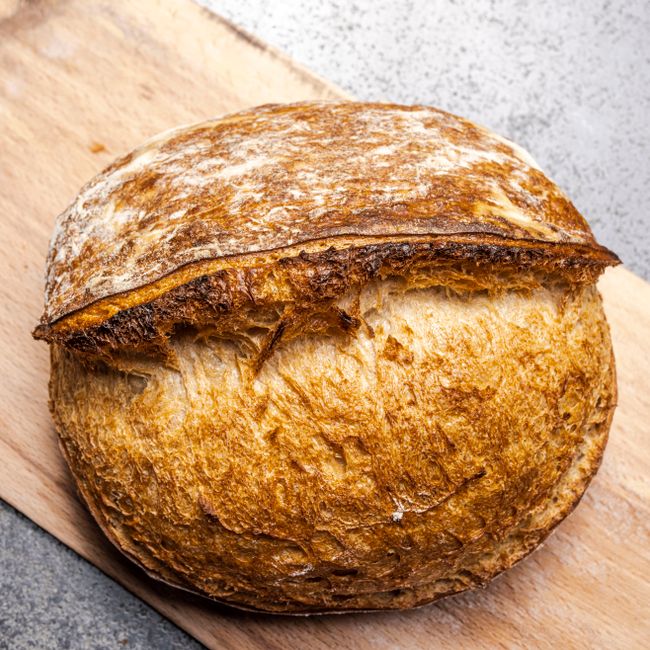
Sourdough bread is a product of patience, observation, and careful timing. Unlike commercial breads that rely on packaged yeast, sourdough depends on a natural culture of wild yeast and bacteria. This living starter requires regular feeding and attention, and the fermentation process unfolds over many hours. The result is a loaf with a tangy flavor, airy crumb, and a crisp crust that many home bakers find rewarding to produce.
The process from maintaining a starter to pulling a finished loaf from the oven involves several stages, each influenced by factors such as room temperature, flour type, and hydration level. By understanding these variables and learning to read the dough rather than follow a rigid schedule, a baker can develop a reliable approach. While outcomes vary depending on conditions, the following steps outline a common method used by many home bakers.
Building and Maintaining a Sourdough Starter
A sourdough starter is a mixture of flour and water that captures wild yeast and lactic acid bacteria from the environment. To begin, a baker combines equal parts by weight of flour and water and leaves the mixture at room temperature, feeding it fresh flour and water every day. Within a week or two, depending on temperature and the activity of the microbes, the starter should become bubbly and increase in volume after feeding. At this point, it can be used for baking.
Maintaining a starter involves regular feeding to keep the microbial community healthy and active. A typical ratio is one part starter to two parts flour and two parts water, though variations exist. The consistency of the starter, often referred to as its hydration level, influences how it behaves in a dough. A stiffer starter may favor acetic acid production, while a more liquid starter encourages lactic acid. Temperature also plays a role: a warmer environment accelerates fermentation, while a cooler one slows it down. Many bakers keep their starter in the refrigerator between bakes and feed it once a week, bringing it back to room temperature and feeding it before use.
Signs of a healthy starter include a pleasant tangy aroma, a domed top after feeding, and the ability to double in volume within four to six hours at room temperature. If these signs are not present, the starter may need additional feedings or adjustment of the feeding schedule.
Understanding Dough Hydration and Flour Types
Hydration refers to the ratio of water to flour in the dough, expressed as a percentage. For sourdough, hydration typically ranges from 65% to 85% or higher. Higher hydration doughs produce a more open crumb but are stickier and more challenging to handle. Lower hydration doughs are firmer and easier to shape but may yield a denser texture. The choice of hydration depends on the baker’s preference and the flour being used.
Different flours absorb water at different rates. Bread flour, with its higher protein content, can absorb more water than all-purpose flour. Whole wheat and rye flours also absorb more liquid and add distinct flavors. Many bakers blend flours to achieve a balance of flavor, structure, and handling properties. The baker’s experience and the dough’s behavior during mixing and fermentation will guide adjustments to the hydration level.
Understanding how flour interacts with water is a key part of the sourdough process. A baker might start with a moderate hydration of around 70% and increase or decrease based on the observed consistency of the dough. This flexibility allows the baker to adapt to the specific characteristics of their starter and flour.
The Bulk Fermentation Phase
Bulk fermentation is the period after mixing the dough and before dividing and shaping. During this time, the yeast and bacteria in the starter produce gases that cause the dough to rise, while enzymes break down starches and proteins, developing flavor and structure. The duration of fermentation varies widely, often ranging from three to six hours at room temperature, but can be extended or shortened by temperature.
During bulk fermentation, a series of stretch-and-fold techniques are commonly applied every thirty minutes for the first two hours. This process helps strengthen the gluten network and redistributes temperature and microorganisms throughout the dough. The dough becomes smoother and more elastic with each fold. The baker monitors the dough for signs of development, such as a visible increase in volume, a domed surface, and small bubbles on the sides.
The end of bulk fermentation is determined by observation rather than by a fixed time. A well-fermented dough will feel aerated, jiggle slightly when the container is shaken, and have a visible network of gas bubbles. If the dough is under-fermented, it may lack volume and feel dense. Over-fermentation can cause the dough to collapse and become sticky. Temperature control is one way to influence the pace of fermentation; a warmer environment speeds it up, while a cooler environment slows it down.
Shaping and Proofing the Dough
Once bulk fermentation is complete, the dough is gently turned onto a lightly floured surface and divided if making multiple loaves. Shaping involves folding the dough into a tight ball or an oblong shape, creating surface tension that helps the loaf hold its structure during proofing and baking. A baker typically pre-shapes the dough into a round, lets it rest for about twenty minutes, and then performs a final shaping.
After shaping, the dough is placed in a proofing basket, often called a banneton, which is lined with a cloth and dusted with rice flour or all-purpose flour to prevent sticking. The dough then undergoes its final proof, which can be done at room temperature for one to two hours or in the refrigerator overnight. Cold proofing is common because it slows fermentation, allowing flavor to develop further while making the dough easier to score and handle.
The proofing time is again judged by the dough’s appearance and behavior. A properly proofed loaf will have increased in size, feel light and airy, and spring back slowly when pressed gently with a finger. If the dough springs back quickly, it may need more time. If it does not spring back at all, it may be over-proofed and could collapse during baking.
Baking with Steam and Oven Heat
Baking sourdough requires high heat and steam to produce a crispy crust and soft interior. A common method is preheating a Dutch oven or a similar heavy pot in the oven at a temperature around 475°F (245°C). The shaped and proofed loaf is placed inside the hot pot, scored with a blade to allow controlled expansion, and covered to trap steam. After the first twenty to twenty-five minutes, the lid is removed to allow the crust to brown and crisp.
For bakers without a Dutch oven, alternative steam sources can be used, such as placing a pan of boiling water on the lower rack or spraying water into the oven at the start of baking. The presence of steam during the first part of baking keeps the crust soft, allowing the loaf to expand fully. Once the steam dissipates, the heat dries and caramelizes the crust, creating a glossy, crunchy surface.
The total baking time typically ranges from forty to fifty minutes, depending on the loaf size and oven characteristics. Internal temperature can be checked with a thermometer; a fully baked loaf usually reads around 205°F (96°C). After baking, the loaf should be placed on a wire rack and allowed to cool completely before slicing. Cutting into a warm loaf can result in a gummy texture, as the starches need time to set.